Why Hidden Definitions Kill KPI Alignment
3 min read

Many factories describe themselves as data-driven. Then, in the same meeting, two credible leaders disagree about something as basic as downtime, output, scrap, or OEE—not because someone is careless, but because each number is built from a different hidden definition. The conflict is rarely loud at first. It arrives as polite friction: “that is not what my report says,” “we do not count that stop the same way,” “finance sees it differently.” Once that becomes normal, KPI alignment does not fail dramatically. It erodes.
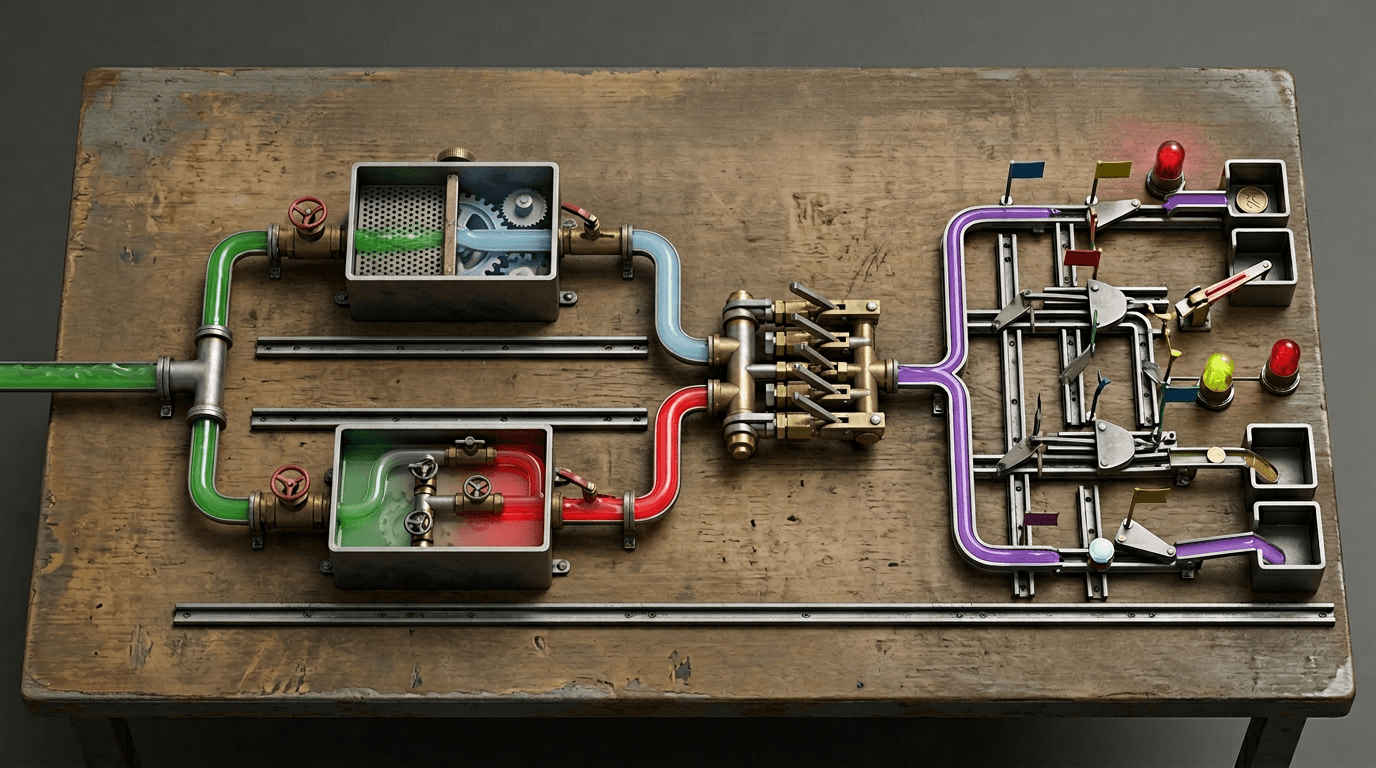
A KPI is only as strong as its shared meaning. A dashboard can make misalignment look polished: consistent colors, crisp visuals, executive-friendly layouts. If the definitions underneath are fragmented, the plant is visualizing multiple truths with a single style guide. The number travels. The truth does not. Hidden definitions create quiet conflict—operations counts downtime one way, maintenance excludes certain categories, quality classifies defects with a different logic, leadership reads a summary that smooths away the seams. Everyone is “right.” The plant still cannot steer.
Misalignment slows decisions before it shows up as a reporting error. It appears as repeated meetings, debates about interpretation, inconsistent escalations, and declining confidence in action. The organization becomes slower because important discussions start with translation instead of execution. People spend energy arguing what happened instead of fixing what is happening.
This is not only an analytical problem. It is an economic one. Hidden definitions create operational cost: delayed response, unclear ownership, weaker accountability, poor comparability over time, and decisions that teams do not trust equally. Definition work is not paperwork for analysts. It is an execution issue—because what you measure shapes what you escalate, what you assign, and what you improve.
Factories often treat definitions as documentation. In reality, definitions are part of how the plant runs. They shape what gets escalated, what gets assigned, what gets measured, and what gets rewarded. Alignment belongs inside the operating system, not outside it in a binder.
Alignment becomes practical when the plant can work from one shared data layer, one logic for events and states, and one execution context across teams. That does not eliminate debate—healthy debate remains. It reduces invisible semantic drift, which is the silent tax that compounds week after week.
IRIS matters here because it is built around one system, one operational layer, and one path from data to action. The value is not only displaying KPIs. It is helping the plant work from shared definitions, shared context, and shared execution logic—so alignment becomes an operating property, not a reporting exercise.
If leadership wants a blunt test, ask: do teams define the same events the same way; do escalations follow one logic; do actions start from one shared truth. If the answers are unclear, the misalignment is probably already costing speed and trust.
KPI alignment does not fail only because dashboards are weak. It fails because hidden definitions create multiple truths inside the same plant. The fix is not more visualization alone. The fix is one shared operating logic behind the numbers—so when the plant moves, it moves together.
The operational bottom line
The promise of this article—KPI alignment improves when the plant shares one operational truth, not just one dashboard view—becomes operational only when it changes how work moves: clearer ownership, faster first assignment, and closure you can trace without inbox archaeology. For “Why Hidden Definitions Kill KPI Alignment,” treat that as the acceptance test: the next shift should be able to read what happened, what was approved, and what remains open—without relying on verbal reconstruction.
That standard is not about software perfection; it is about operational honesty: fewer mystery handoffs, fewer truths reconciled only in meetings, and more days where the system record matches what the floor would say if you stopped them mid-task.
IRIS helps factories work from shared definitions, shared context, and one execution logic instead of disconnected KPI interpretations. Start interactive demo or Start 14-day trial.