Why Factories Need One Decision Layer Before More AI Models
3 min read
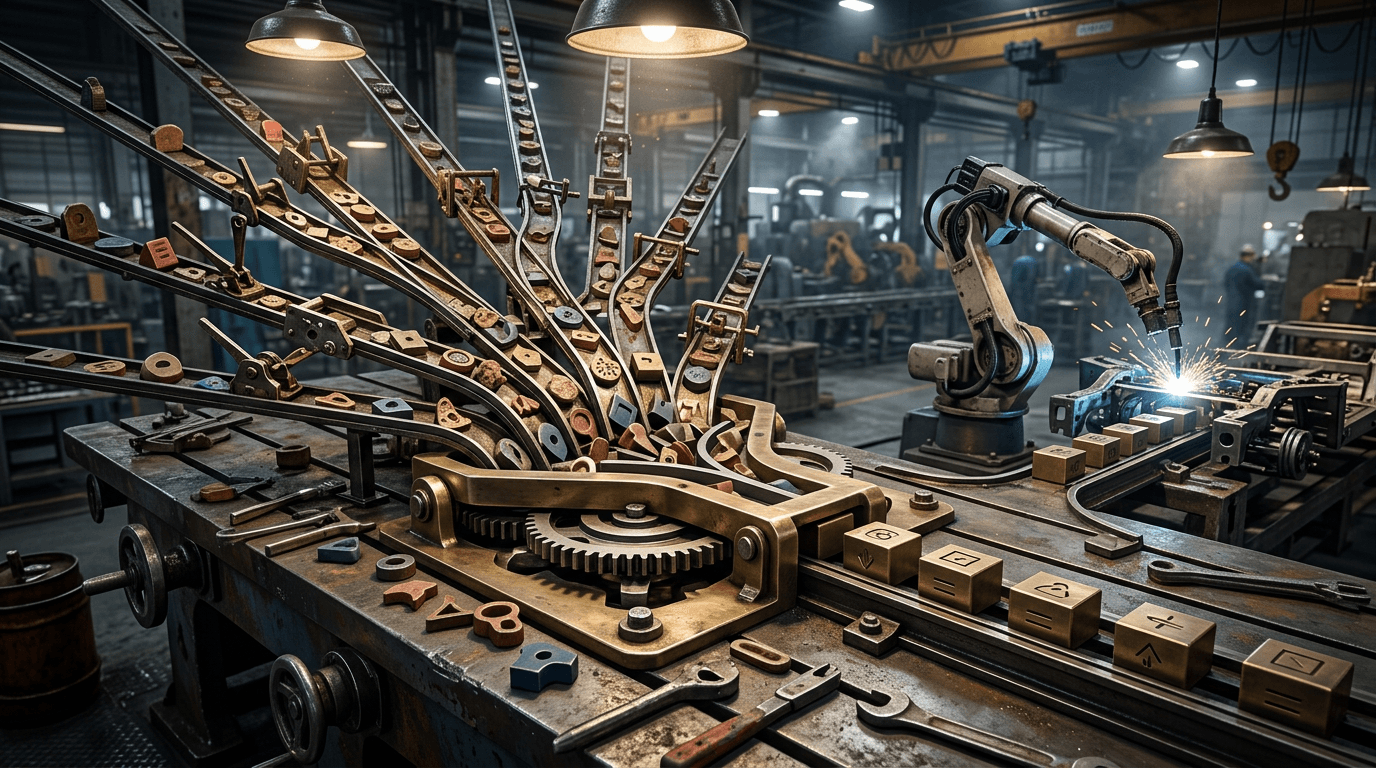
Factories need one decision layer before adding more AI models because models amplify whatever operating structure already exists. If priorities and definitions are fragmented, more models tend to produce more conflicting recommendations—not better coordination. Adding models is easy. Adding coherence is hard. Sequencing is not conservatism. It is risk management.
A decision layer is not a dashboard. It is the place where the plant answers what matters most right now, who owns the next step, what is blocked and why, and which tradeoffs are explicit. If those answers live in parallel channels, you do not have a decision layer. You have a crowd—and the crowd becomes expensive when every new assistant adds another voice.
Each model consumes partial data, partial context, and partial incentives. When outputs collide, humans become full-time reconcilers. That is costly. It also trains the organization to ignore assistance, because “AI” starts to mean “another opinion to argue with.”
A simple coherence test helps leadership be honest. Can two functions see the same prioritized queue for cross-cutting issues? Do conflicting priorities escalate through a known path? Are definitions for downtime, blocked, and critical aligned in the system of record? Is there a single audit trail from signal to decision to task to closure? If you answer “no” twice, stop buying models until you fix the layer.
A minimum viable decision layer is explicit, not fancy. It needs one intake grammar—required fields when an issue enters—one prioritization rubric (even a simple matrix beats hallway ranking), one escalation ladder with timers, and one execution router that hands work to owned workflows. Models should improve steps inside that layer, not invent new decision venues.
Add a new model only when it improves a step inside this layer—better clustering inside the same queue, better suggested routing within the same ownership model, better summarization for handoffs that still end in the same system. Be wary of expansion that creates a second prioritization assistant elsewhere, or proposals that change state without writing to the system of record.
IRIS fits this argument because a decision layer becomes operational only when prioritization, escalation, and routed work stay in one governed system story. That is different from the broader connected-execution story in How AI Is Changing Factory Operations When Execution Is Connected—this article is specifically about resolving competing priorities before model count grows.
For scoring and routing across functions once the layer exists, see How AI Can Prioritize Factory Issues Across Functions.
Models scale confusion when the plant lacks a decision layer. Build the layer first—then let models compete on usefulness inside it, not outside it.
The operational bottom line
The promise of this article—a clear argument for stabilizing one decision layer for prioritization, conflict resolution, and execution routing before expanding model count—becomes operational only when it changes how work moves: clearer ownership, faster first assignment, and closure you can trace without inbox archaeology. For “Why Factories Need One Decision Layer Before More AI Models,” treat that as the acceptance test: the next shift should be able to read what happened, what was approved, and what remains open—without relying on verbal reconstruction.
That standard is not about software perfection; it is about operational honesty: fewer mystery handoffs, fewer truths reconciled only in meetings, and more days where the system record matches what the floor would say if you stopped them mid-task.
Hold teams to a simple rule: if an improvement cannot be shown in exports from the execution record, it is not yet an operating improvement—only a narrative improvement. That rule keeps programs honest when demos look good but handovers still feel fragile. If the record is thin, fix the record before you expand the ambition.
DBR77 IRIS implements the decision-to-execution chain in one layer across production, warehouse, quality, maintenance, and tasking so AI stays coherent. Watch walkthrough or Start interactive demo.