When Vendor AI Tools Should Feed the Execution Layer and When Not To
3 min read

The vendor demo is not your night shift. Your execution record is. Vendor AI tools should feed the execution layer when outputs map to stable task types, data handling matches plant retention and access rules, latency fits operational SLAs, and assisted actions land with the same approval and audit fields as native workflows. Do not feed the layer when the vendor cannot commit to immutable logs for act behaviors, refuses field-level lineage, or requires operators to live in a separate app for closure. A tool that cannot close a loop in your system of record is a side project—not operations infrastructure.
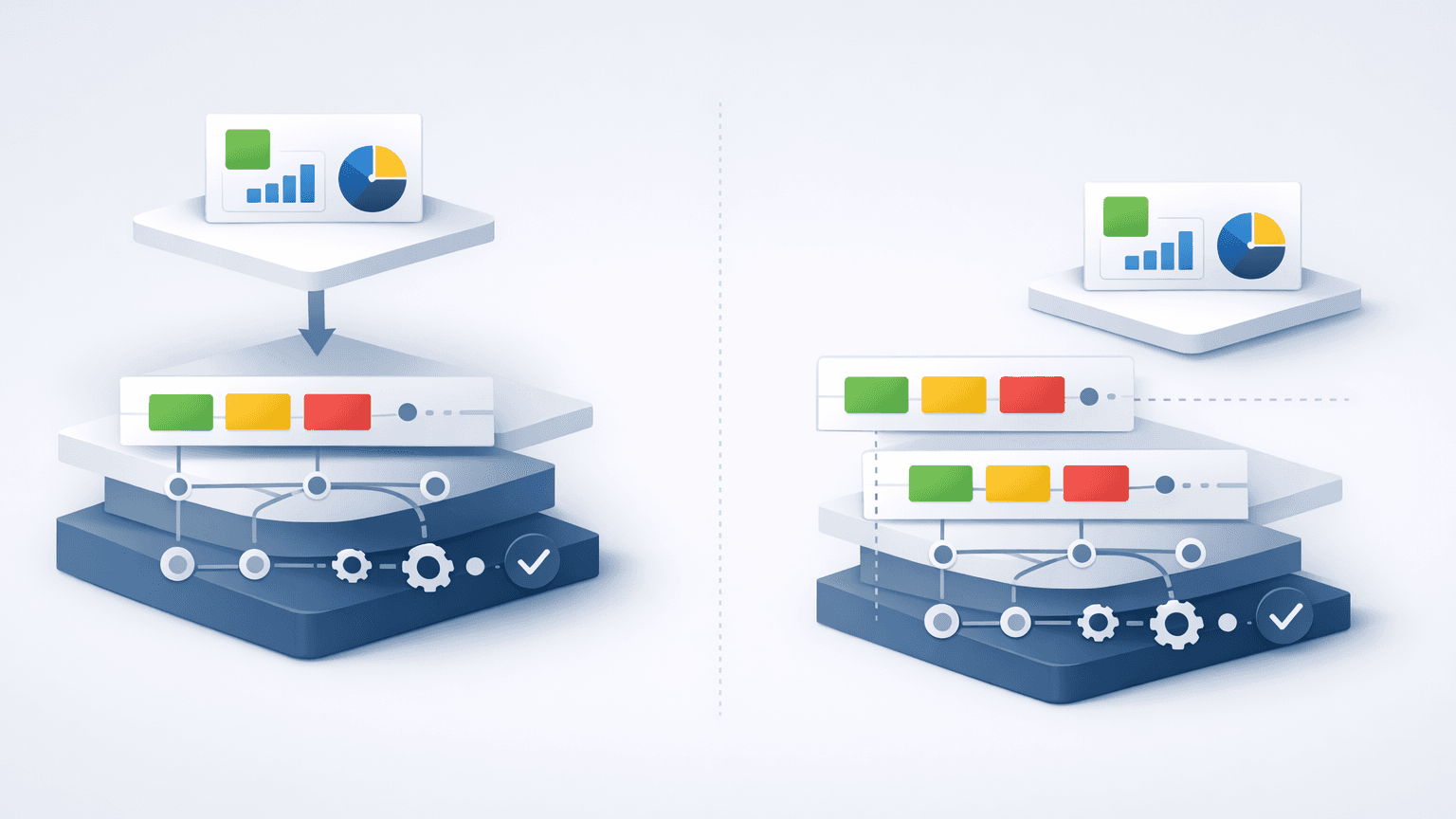
Treat integration decisions as operational fit tests. Structured IDs and owners, respect for plant policy classes, contractually defined exportable logging, predictable latency, and clear data residency posture belong in the “feed the layer” column. Free-text-only outputs, shadow approvers, opaque transient logs, batch or unpredictable latency, and unclear subprocessors belong in the “keep adjacent” column. If multiple rows land wrong, do not integrate for act modes—no matter how polished the demo.
Protect yourself in contracts: explicit system-of-record designation for assisted decisions, retention and export formats, change notification when models or prompts affect routing, incident support expectations, and a decommission path with data extract and field mapping. Unsigned clauses become oral promises that expire at the first outage.
Pilot safely: mirror outputs in shadow without routing, measure precision on claims and dismissals, walk ten real exceptions end-to-end with audit fields, red-team a shift with stale data and duplicates, promote to advise and only then toward act on workflows with stable closure.
Best-of-breed stacks win feature debates. Spine-first architectures win follow-through—one closure habit, mostly native audits, concentrated training load, and workflow-bounded failure isolation.
Adjacent tools still make sense for pure engineering analytics with no line state change, offline experimentation, or supplier portals the plant never treats as operational truth—if labeled clearly so they do not leak into act paths.
IRIS is built as the execution spine vendors should meet: publish into the same task, approval, and closure shape as native workflows—so procurement compares operational fit instead of novelty.
For decision-layer and ownership context, see Why Factories Need One Decision Layer Before More AI Models, How to Build a Cross-Site Playbook for AI-Assisted Factory Operations, and What Data Ownership Should Look Like in an AI-Native Plant Operating System.
Procurement should treat “integration” as a behavioral test, not a checkbox. Ask vendors to demonstrate closure: show how an assisted output becomes a task, how approvals attach, how exports look, and how logs behave under legal hold. If the demonstration keeps returning to a separate portal where operators must “finish later,” you are buying parallel work, not operational leverage.
Also plan for exit early. Vendors change models, change terms, or disappear from relevance. If your execution spine depends on a proprietary closure shape you cannot extract, you have created a new silo while trying to remove old ones. Spine-first integration demands decommission clarity: what gets exported, how fields map, and how the plant keeps running if the vendor blinks.
Integrate vendors on closure discipline, not on novelty. If they cannot write to your record with the same accountability as internal workflows, keep them out of act modes.
The operational bottom line
The promise of this article—a decision matrix on contracts, data handling, latency, ownership, and closure hooks so vendor tools strengthen execution instead of fragmenting it—becomes operational only when it changes how work moves: clearer ownership, faster first assignment, and closure you can trace without inbox archaeology. For “When Vendor AI Tools Should Feed the Execution Layer and When Not To,” treat that as the acceptance test: the next shift should be able to read what happened, what was approved, and what remains open—without relying on verbal reconstruction.
DBR77 IRIS is the execution spine where vendor outputs should land as structured tasks with the same approvals and closure fields as native workflows. Start interactive demo or Start 14-day trial.