What Full Operational Closure Should Look Like in an AI-Native Factory
3 min read
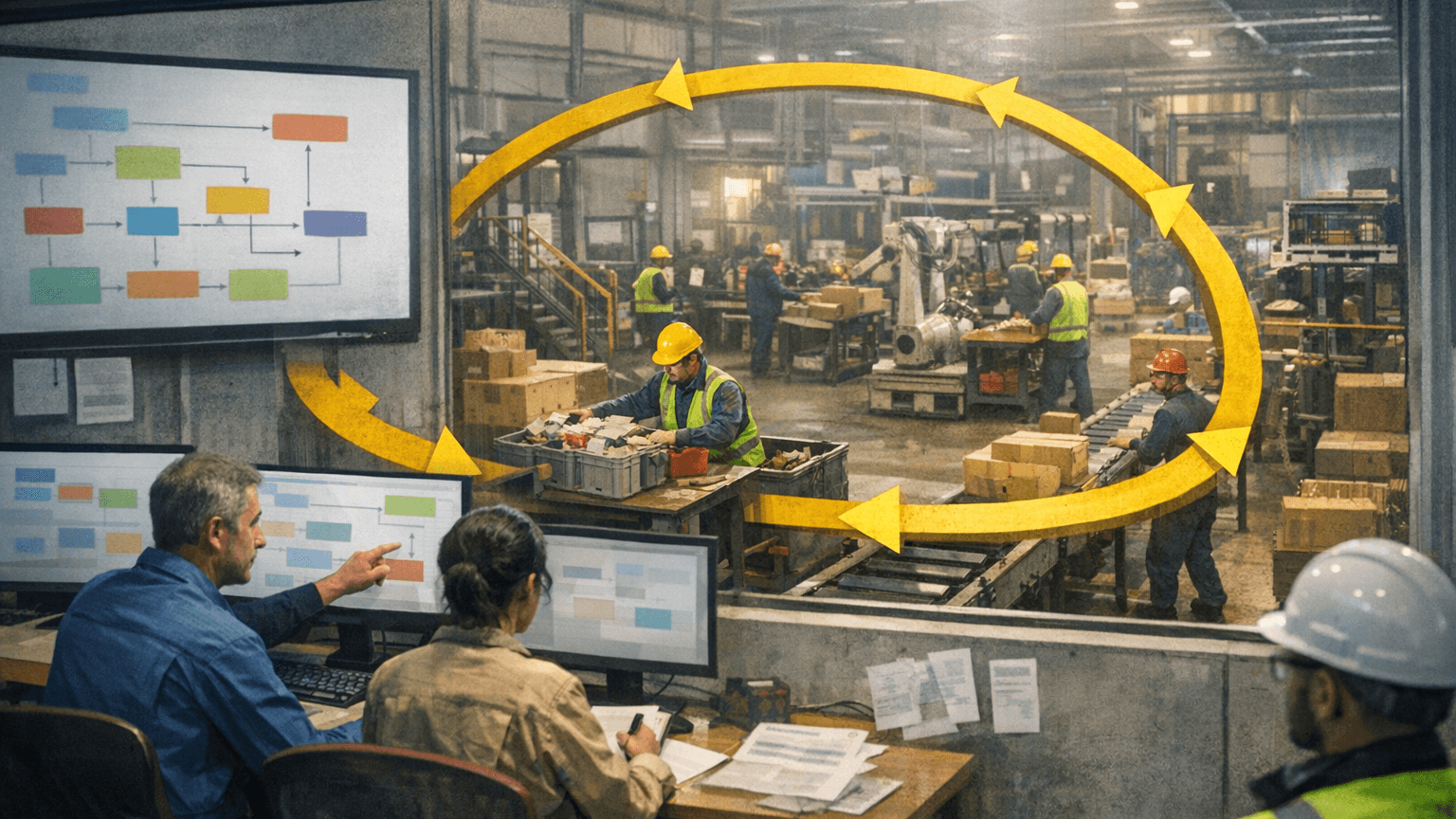
Closure is not a mood. It is a matching set of facts. Full operational closure in an AI-native factory means every assisted path ends in a verified state: physical work complete, system records aligned, approvals captured, deviations logged, and follow-up tasks either completed or scheduled with owners and dates. Closure is false if inventory, quality status, or maintenance history disagree across systems. Assistance is part of the chain—not a parallel story that nobody reconciles. If you cannot export a closure packet for a random week in under an hour, you have not reached closure maturity. You have reached visibility with loose ends.
Think in gates. Operational state should return to defined run mode or controlled stop. Documentation and parameters should be updated as required. Quality disposition should be consistent across dependent records. Inventory truth should reconcile for the affected scope. Maintenance history should reflect what was done, by whom, with parts and time. Temporary mitigations should carry dated tasks with escalation if breached. Skip a gate and the next shift inherits risk.
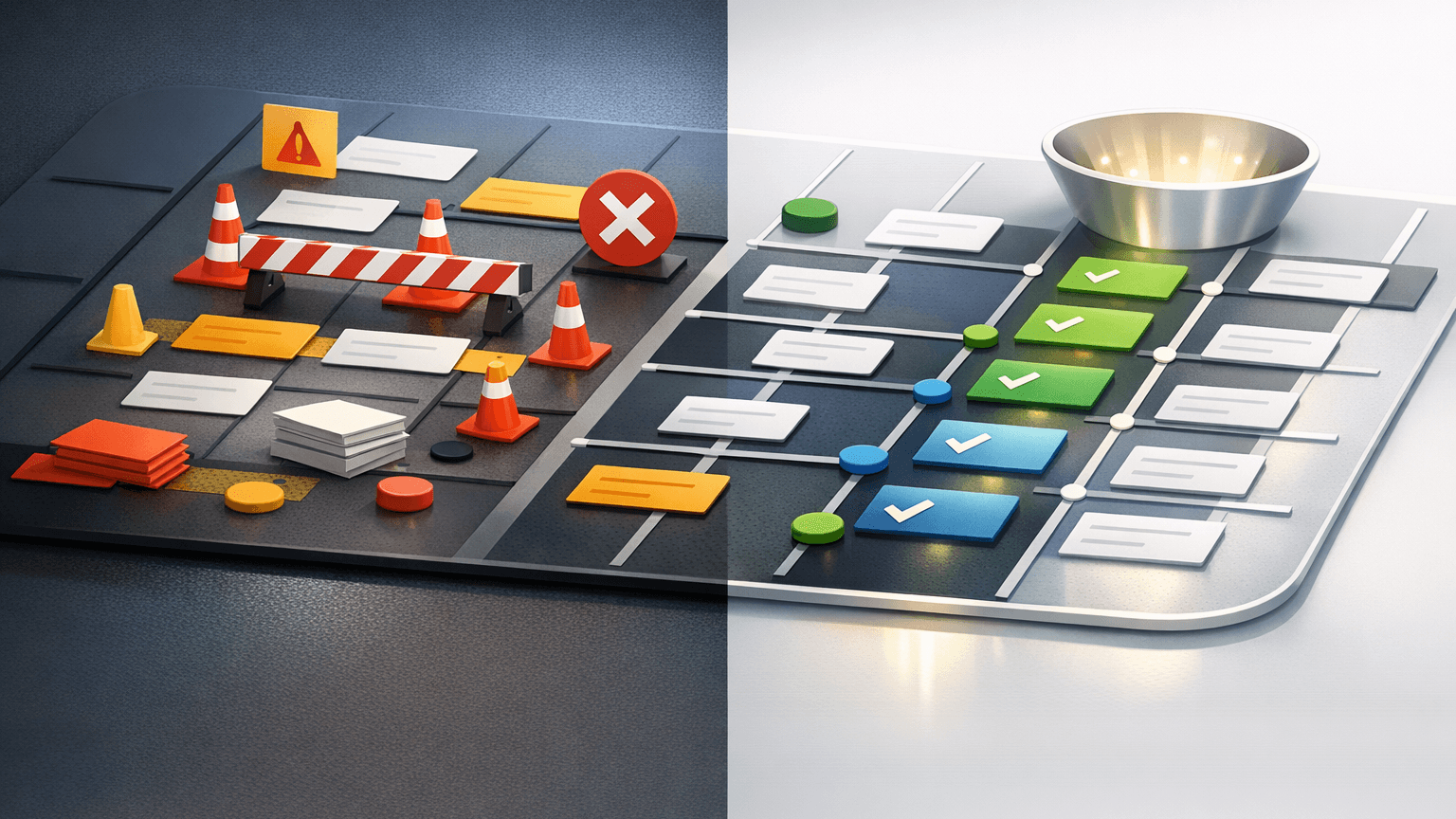
Partial closure feels fast until someone pulls the thread. Tasks marked done verbally while standard work is unverified, holds lifted in one system but not others, assistance dismissed without record, KPIs green while exceptions linger—these patterns feel efficient until a customer or auditor arrives. Full closure is slower only when measured naively. It is faster when measured across the full lifecycle of an issue.
Run a weekly integrity sample: trace random assisted items through the gates, measure mismatch minutes between systems for inventory and quality, list recurring partial-closure themes, assign one owner per theme with a thirty-day fix target.
A ninety-day maturity path might publish closure definition version one with gate owners, align improvement meetings to gate failures instead of anecdotes, integrate assistance dismiss-and-convert rules into the same gates, run a cross-function drill on a simulated multi-system hold, and publish a closure packet template for customers and auditors. When legacy constraints block full automation, publish explicit partial-closure boundaries and compensating controls—not silent gaps.
Plants often call an issue closed when visible pain stops. The line runs. The queue moves. The urgent call ends. Partial closure still leaves risk when quality state is fixed in one place but not others, temporary workarounds lack dated owners, or open dependencies hide inside “completed” tasks. Closure must be a multi-system condition, not the moment stress drops.
IRIS aims closure-first when assistance, tasks, approvals, and dependent states live in one execution story—making gaps visible the same day instead of after the next complaint.
For connected execution and audit neighbors, see How AI Is Changing Factory Operations When Execution Is Connected, How to Create Audit-Ready Records for AI-Assisted Factory Decisions, and How to Design an Exception Handling Model for AI-Assisted Operations.
Mature AI-native operations do not impress with volume. They impress when every assisted path can end with a defensible, exportable closed state.
The operational bottom line
The promise of this article—a closure definition that spans production, warehouse, quality, maintenance, and tasking with measurable gates and a single execution record—becomes operational only when it changes how work moves: clearer ownership, faster first assignment, and closure you can trace without inbox archaeology. For “What Full Operational Closure Should Look Like in an AI-Native Factory,” treat that as the acceptance test: the next shift should be able to read what happened, what was approved, and what remains open—without relying on verbal reconstruction.
Hold teams to a simple rule: if an improvement cannot be shown in exports from the execution record, it is not yet an operating improvement—only a narrative improvement. That rule keeps programs honest when demos look good but handovers still feel fragile.
DBR77 IRIS unifies production, warehouse, quality, maintenance, and tasking on one execution layer so closure gates align across systems the same day gaps appear. Start interactive demo or Start 14-day trial.