What a Human Approval Policy Should Look Like in Factory AI
3 min read
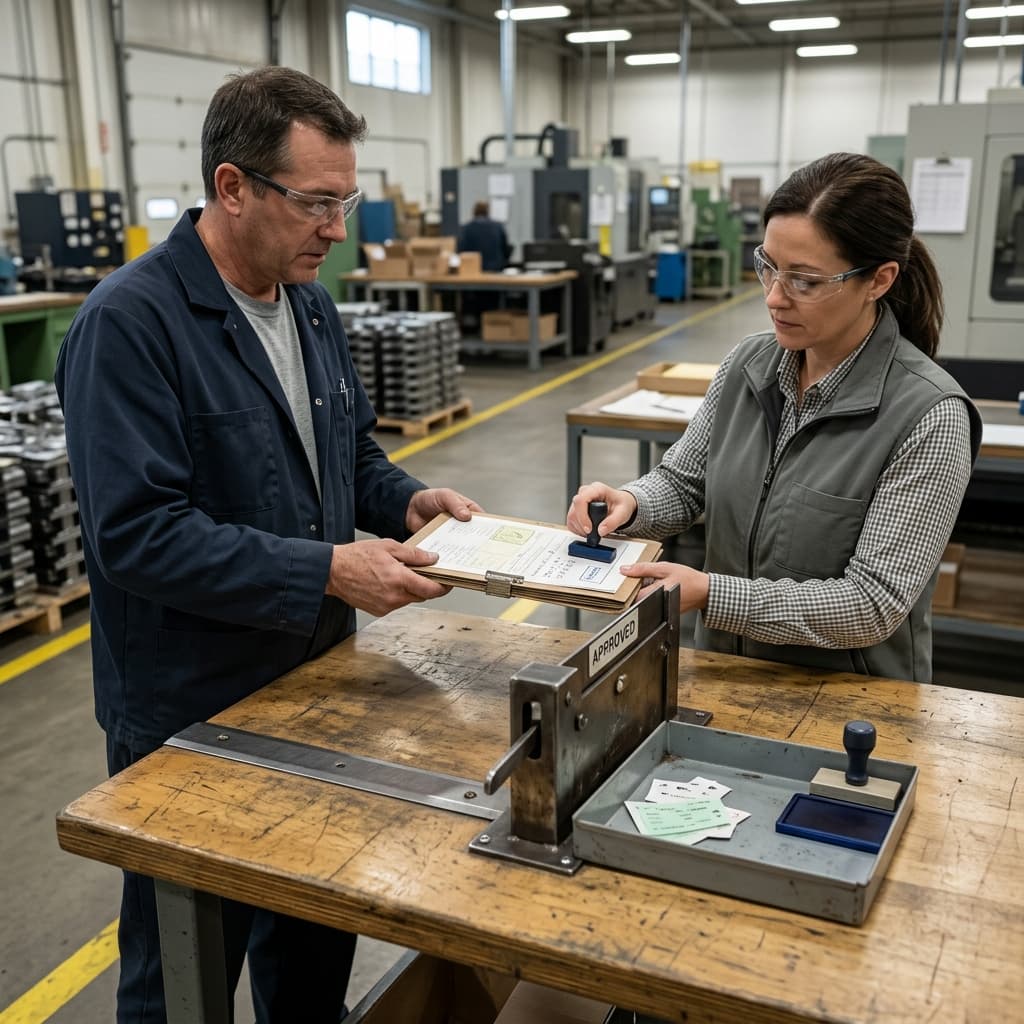
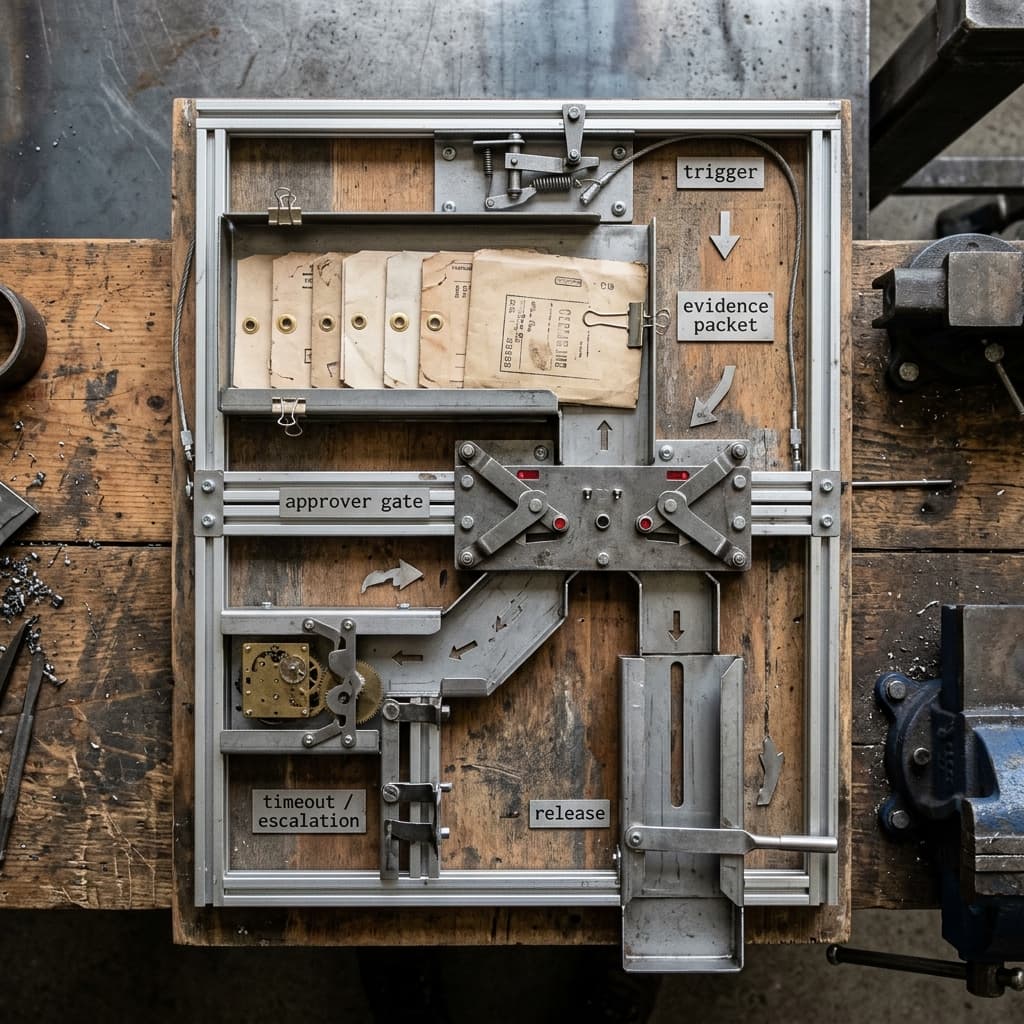
A human approval policy for factory AI should be boring on purpose. Boring is what makes operations predictable. It should state which workflow states require named human sign-off, what evidence must be visible at sign-off, how long approvals may wait before escalation, who covers nights and weekends, and how overrides are recorded. It should reference risk and reversibility, but it must land in concrete workflow fields and roles. If it only talks about “the AI,” it will fail audits and the shop floor.
Start with scope and definitions: which workflows and sites are covered; what watch, advise, and act mean in plant language; which systems are systems of record for approvals. Avoid vendor marketing names in the core text. Use workflow and asset language auditors recognize.
Build an approval matrix by workflow state. Empty approver cells are how incidents happen. Each row should answer what mode is allowed, which human gate applies, and which role signs.
Require an evidence package at approval time: fields used, uncertainty flags, linked reference cases framed as context (not authority), reversibility and rollback steps. Approvers should be able to say, plainly, “I saw X, therefore I signed.”
Define time-based escalation. Silent timeouts are how “the system decided” becomes rumor. State maximum waits by severity, who escalates at timer breach, and what happens to act-mode behavior during backlog.
Cover delegation: night deputies, vacation rules, emergency downgrade to advise-only with explicit authority. If coverage is not written, people bypass with shared logins—and traceability dies.
Policies usually fail on weekends, coverage gaps, and backlog—not in workshops. The test is whether the rule survives night shift absence, fast queue clearing after a rush, and post-incident scrutiny without six competing stories.
Training and recertification belong in the policy: who must complete training before approval rights, triggers for annual or post-incident refresh, how contractors are handled. Training records are part of control, not HR decoration.
Operational policy check: Can a new supervisor find their gates in under five minutes? Can quality explain the policy without naming a vendor? Can IT produce an approval audit trail for a random week? Three yes answers mean you are close.
IRIS makes approval policy enforceable when evidence, timers, sign-offs, and resulting tasks share one operational record—turning policy into floor-level mechanism.
For decision-rights logic, see When AI Should Recommend and When Humans Should Decide in Operations, When AI Should Watch, Advise, or Act in the Factory, and How to Govern AI Decisions Across Shifts and Functions.
Write approvals in workflow language with named roles, timers, and evidence. If it is not enforceable on the floor, it is not a policy.
The operational bottom line
The promise of this article—a policy skeleton you can publish: scope, thresholds, evidence, escalation, records, and training tied to workflows, not model names—becomes operational only when it changes how work moves: clearer ownership, faster first assignment, and closure you can trace without inbox archaeology. For “What a Human Approval Policy Should Look Like in Factory AI,” treat that as the acceptance test: the next shift should be able to read what happened, what was approved, and what remains open—without relying on verbal reconstruction.
That standard is not about software perfection; it is about operational honesty: fewer mystery handoffs, fewer truths reconciled only in meetings, and more days where the system record matches what the floor would say if you stopped them mid-task.
Hold teams to a simple rule: if an improvement cannot be shown in exports from the execution record, it is not yet an operating improvement—only a narrative improvement. That rule keeps programs honest when demos look good but handovers still feel fragile. If the record is thin, fix the record before you expand the ambition.
DBR77 IRIS stores approvals, evidence, and tasks together so human gates stay traceable across shifts and functions. Start 14-day trial or Watch walkthrough.