How to Keep Human Accountability Clear in AI-Assisted Shift Management
3 min read

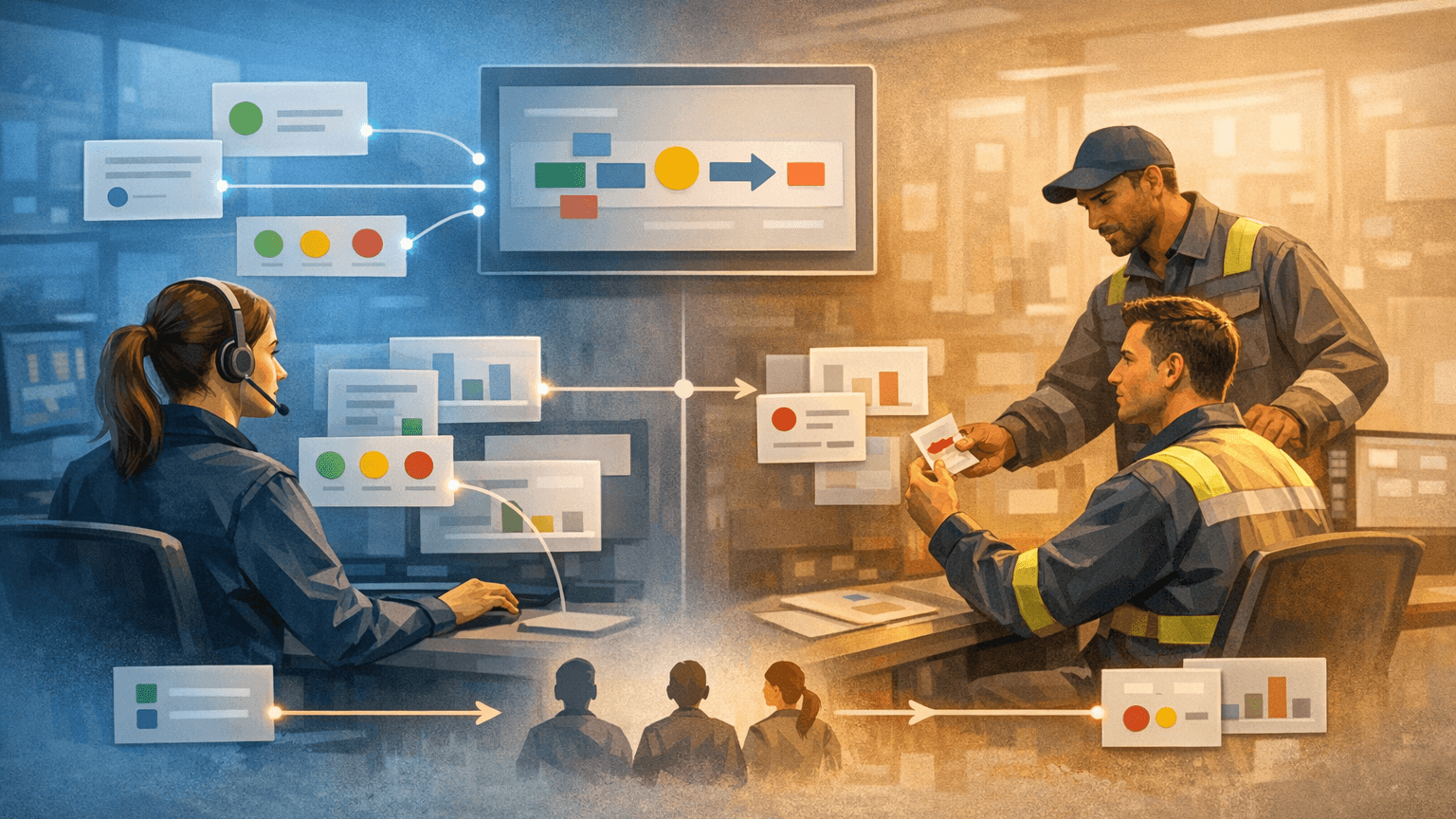
Assistance can recommend. Humans still carry the line. Accountability blurs when nobody can tell whether a state change was a suggestion, a draft, an approval, or an override—especially across handoffs, vacation coverage, and night shift pressure. Keep accountability clear by assigning non-overlapping roles: who must claim assisted items, who can approve act behaviors, who owns overrides with mandatory reason codes, and who signs closure where standard work requires it. Publish a one-page shift charter that repeats the same fields the system uses. Train supervisors to forbid “the AI decided” as a verbal handoff; the record must show a named human state change.
The charter should name four slots each shift: a claim owner for first response on assisted queues, approval authority for releasing protected actions or holds, override authority with reason codes, and closure signers where required—plus deputies written down, not “call someone.”
Handoff fields protect accountability when they live in the system: counts of open assisted items by severity, items waiting on approval with role and age, false-positive themes from the prior shift, flags for trials, vendor feeds, or degraded sensors, and open incidents with linked task IDs. Paper can supplement; it cannot become the system of record without rebuilding ambiguity.
Language shapes liability. Say “I approved release under policy version X” instead of “the system cleared it.” Say “I overrode with reason code Y” instead of “it was wrong.” Say “I claim this queue now” instead of “someone should look.” Shared accountability feels comfortable early and becomes a liability sponge later. Named accountability feels strict until audits and labor conversations go smoothly.
Pause assistance when training gaps appear on required roles, when sensor maintenance creates known bad data, or when labor coverage falls below published approval minimums. Pausing is a decision: log who authorized it and for how long.
IRIS keeps names attached to states—not to chat—when claims, approvals, overrides, pauses, and closures are recorded as operational state changes in one execution record the next shift can read.
For governance and exception neighbors, see How to Govern AI Decisions Across Shifts and Functions, What Factory Jobs Change First in AI-Assisted Operations, and How to Design an Exception Handling Model for AI-Assisted Operations.
Shift management is where abstract AI policy meets muscle memory. If the incoming lead cannot tell what changed overnight—modes, queues, approvals pending, vendor feeds active—then accountability will default to stories. The fix is not more meetings at handover. It is fewer mysteries: system fields that answer the questions supervisors already ask, repeated the same way across teams, so “I thought someone handled it” stops being a normal sentence.
Union and works council contexts add a fairness requirement: accountability rules must be predictable, evenly applied, and visible enough to review when disputes arise. That is another reason “the AI decided” is poisonous language. It hides the human decision that actually moved state. Clear language and clear records protect workers and supervisors alike—because they make disagreements resolvable without turning every incident into a credibility contest.
Clarity is a document plus a system habit. Name the roles, enforce the fields, and coach the language on the floor.
The operational bottom line
The promise of this article—named accountability per shift slice for claims, approvals, overrides, and closures with simple language operators can repeat—becomes operational only when it changes how work moves: clearer ownership, faster first assignment, and closure you can trace without inbox archaeology. For “How to Keep Human Accountability Clear in AI-Assisted Shift Management,” treat that as the acceptance test: the next shift should be able to read what happened, what was approved, and what remains open—without relying on verbal reconstruction.
That standard is not about software perfection; it is about operational honesty: fewer mystery handoffs, fewer truths reconciled only in meetings, and more days where the system record matches what the floor would say if you stopped them mid-task.
DBR77 IRIS stores claims, approvals, overrides, and closures as state changes in one execution record so shift accountability stays named and exportable. Start interactive demo or Start 14-day trial.