How to Evaluate a Plant Operating System for a Real Factory
3 min read
The phrase “plant operating system” is attractive—which is exactly why it is risky. Emerging categories invite label inflation: tools adopt the language before they deliver the operating value. Buyers need an evaluation model that resists polish and tests execution, because factories do not run on slides. They run on handoffs, approvals, and closure under pressure.
Do not evaluate a plant operating system like another dashboard platform. Screen design, module count, chart variety, and architectural breadth may matter, but they do not answer the decisive question: will this improve how the plant executes when two functions disagree, when approval is required, and when the issue crosses production, quality, maintenance, or warehouse boundaries? If the product cannot carry an issue from signal to owner to task to closure inside real constraints, you are not buying an operating system. You are buying another layer of visibility.
Start with the workflows that break today. Where does the plant lose speed; where does ownership blur; where do issues leave the system; where do functions fall out of sync? If the platform cannot improve those breakpoints, interface quality is irrelevant. The evaluation should begin in operating pain, not in feature lists.
Test whether the system creates one shared truth. A real operating layer should reduce chronic debate about event meaning, KPI definition, current status, and next responsibility. If teams can still walk away with incompatible interpretations, the system is not functioning as an operating backbone.
Test whether it closes the loop. Detection is table stakes. The decisive test is the full chain: signal, context, recommendation, approval, tasking, follow-through. If the chain breaks after visibility, you still have reporting—just with a more ambitious name.
Look across functions, not only inside production. Real factories execute across boundaries. An operating system should improve coordination where work actually crosses—warehouse, quality, maintenance, internal communication—not only optimize a single silo’s world.
Ask how it fits the existing stack. Most plants cannot rip and replace everything. Practical questions matter: can it unify above existing systems; can it start with one workflow and expand; does it reduce friction or add another place to reconcile reality?
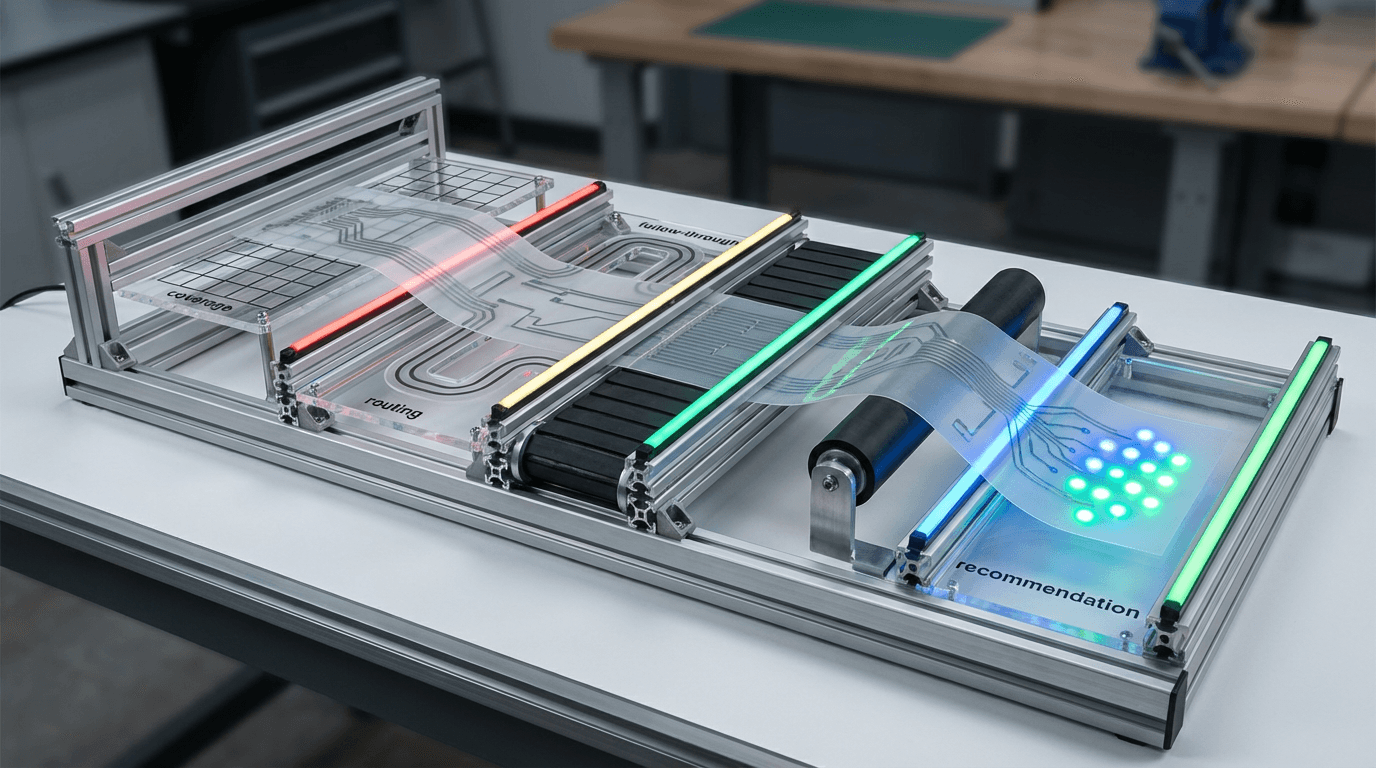
Strong evaluation criteria sound boring because they are honest: shared truth quality, cross-functional workflow coverage, routed ownership, action and follow-through visibility, modular adoption paths, and support for AI-assisted recommendation with human approval where risk requires it. Those criteria move the conversation from features to operating impact.
IRIS is positioned as an AI-native plant operating system rather than another reporting layer. Judge it by whether it can create one shared execution model across production, warehouse, quality, maintenance, and tasking. That is the standard that separates a category claim from an operating advantage.
The right evaluation question is not whether the platform looks impressive. It is whether it helps a real factory align truth, route action, and close loops with less friction—so the plant can defend its decisions tomorrow, not only describe them today.
The operational bottom line
The promise of this article—buyers should evaluate a plant operating system by its ability to unify truth, route action, and close loops across real factory workflows—becomes operational only when it changes how work moves: clearer ownership, faster first assignment, and closure you can trace without inbox archaeology. For “How to Evaluate a Plant Operating System for a Real Factory,” treat that as the acceptance test: the next shift should be able to read what happened, what was approved, and what remains open—without relying on verbal reconstruction.
That standard is not about software perfection; it is about operational honesty: fewer mystery handoffs, fewer truths reconciled only in meetings, and more days where the system record matches what the floor would say if you stopped them mid-task.
DBR77 IRIS gives buyers a practical model for evaluating a plant operating system by shared truth, routed execution, and modular rollout across the factory. Start interactive demo or Watch walkthrough.