How to Create One Shared Operating Layer Across Factory Systems
3 min read
Most factories already have a stack. MES, WMS, QMS, CMMS, and ERP each do real work. And still the plant depends on people to translate between them—to decide what an alarm “means” for the next hour, which function should move first, and whether the issue is truly closed or merely quiet. That translation layer is not a small detail. It is the operating system the business is actually running, whether or not it appears on an architecture diagram.
More software does not automatically create more control. New tools can improve local pockets while the plant-level experience remains fragmented: events separated, definitions mismatched, ownership scattered, action happening outside the systems that saw the first signal. A digital plant can still behave like a disconnected plant because digitization without orchestration digitizes chaos faster.
The issue is not only whether systems exchange data. Integration can move records and still leave execution slow, because the plant also needs one coherent way to answer what happened, how urgent it is, what else is affected, and who should act next. Connected systems with disconnected meaning force the organization to rebuild coordination manually—through meetings, spreadsheets, calls, and local interpretation. Integration can look mature while the operating model stays fragile.
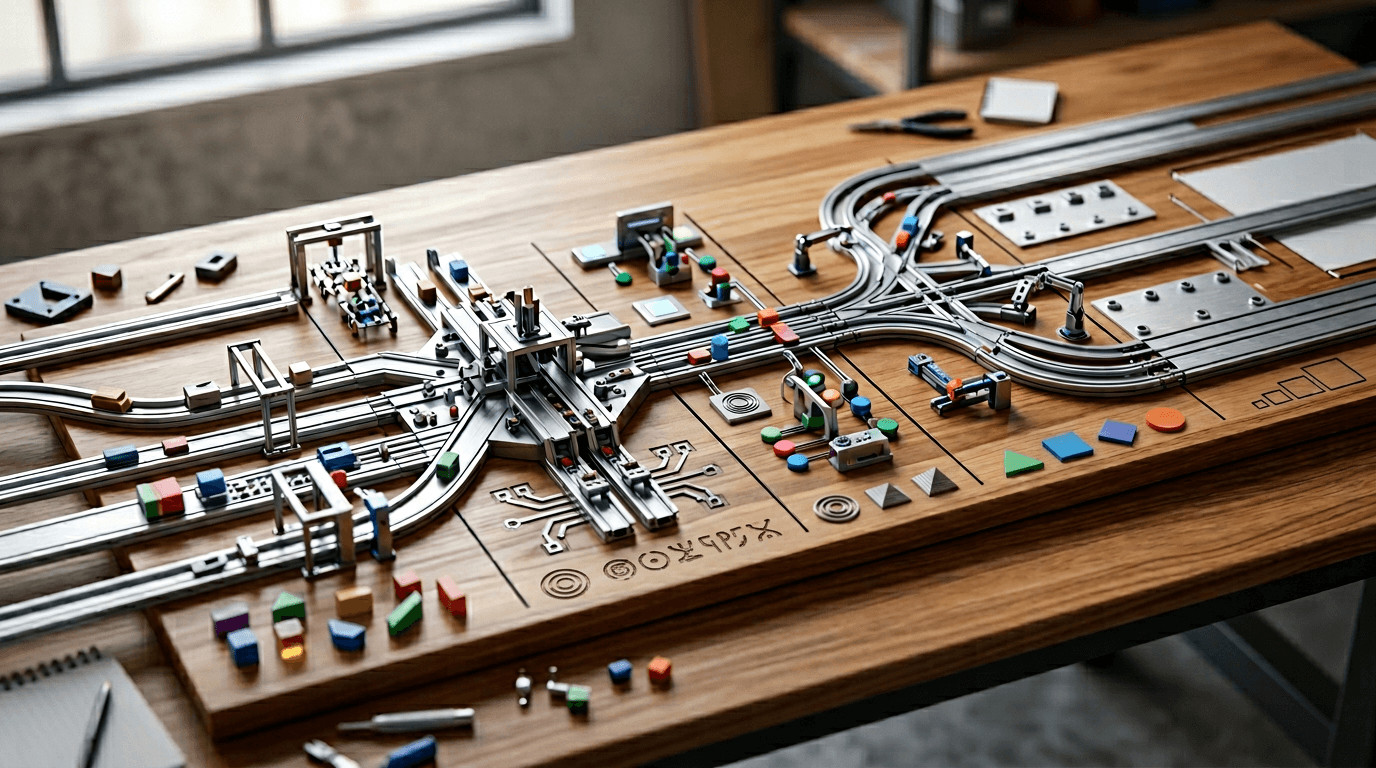
A shared operating layer is not a mandate to collapse everything into one monolith overnight. It is the commitment to one fabric that can recognize events across systems, maintain shared definitions, add cross-functional context, route the next action to the right owner, and keep follow-through visible. That is how digital infrastructure becomes coordinated operations instead of a collection of better islands.
Shared context matters more than raw connectivity. The plant improves when teams work from one clearer interpretation of reality: what changed, why it matters, which function is affected next, and where responsibility now sits. Context turns data into decisions. Without it, faster pipes mainly accelerate disagreement.
Factories should connect systems in a modular, defensible sequence: identify the cross-functional workflows that break most often; unify the definitions those workflows depend on; connect the most critical events first; tie events to tasking and follow-up; expand once the model proves value in real shifts. This builds coherence without pushing the plant into a big-bang replacement fantasy.
The operating layer must include execution. Centralized data alone does not make a plant more capable. Capability shows up when the system helps the organization respond faster with less friction: live operational truth, routed ownership, visible follow-through, traceable closure. Otherwise the effort drifts toward reporting architecture instead of a working operating model.
IRIS is relevant because it is positioned as one execution layer across production, warehouse, quality, maintenance, and tasking. The value is not erasing every existing system. It is helping the plant build one shared operating layer above fragmented functions—so the stack you already own can finally behave like one plant.
Factories do not need to force every system into one box to work more coherently. They need one shared operating layer that gives the plant common truth, common context, and coordinated execution across the tools that shape daily work.
The operational bottom line
The promise of this article—factories do not need one giant replacement project to work more coherently; they need one shared operating layer for truth, context, ownership, and execution across existing systems—becomes operational only when it changes how work moves: clearer ownership, faster first assignment, and closure you can trace without inbox archaeology. For “How to Create One Shared Operating Layer Across Factory Systems,” treat that as the acceptance test: the next shift should be able to read what happened, what was approved, and what remains open—without relying on verbal reconstruction.
That standard is not about software perfection; it is about operational honesty: fewer mystery handoffs, fewer truths reconciled only in meetings, and more days where the system record matches what the floor would say if you stopped them mid-task.
DBR77 IRIS helps plants create one shared operating brain by connecting truth, context, tasking, and follow-through across production functions. Start interactive demo or Watch walkthrough.