How to Build a Real-Time KPI System for Your Factory
3 min read
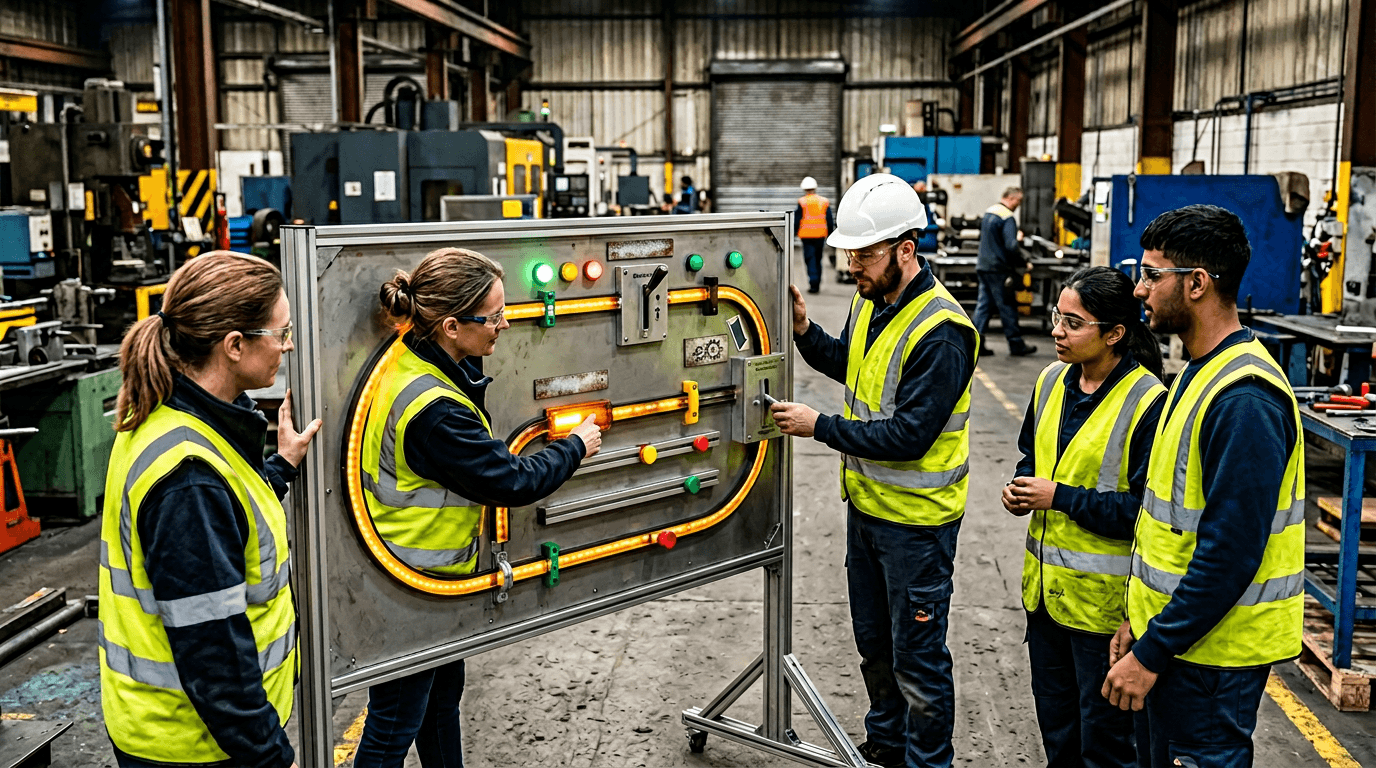
Many plants say they run on KPIs. What they often mean is that KPIs arrive as reports—after the shift has already paid the price. There is a difference between measuring performance and controlling it. A real-time KPI system is not defined by how fast a chart refreshes. It is defined by whether the metric arrives soon enough to change behavior, tied to a definition everyone uses, routed to an owner who can act, and backed by follow-through the organization can see.
If a KPI only supports explanation, it is a retrospective tool. If it supports intervention, it becomes an execution tool. That distinction is where most KPI programs miss the mark. Dashboards can increase awareness without increasing control, because awareness without ownership is just a faster way to watch problems unfold.
Real-time value starts with operational truth: trusted sources, stable definitions, timing that matches the decision window, and a clear path from deviation to response. Without those foundations, a “live” metric is still late in the only sense that matters—it cannot change what happens next on the floor.
Not every metric deserves real-time treatment. The candidates are the ones that should change decisions inside the operating window: unplanned downtime patterns, throughput variance against plan, quality deviation signals, backlog pressure, response-time failures, and other measures where delay converts directly into lost minutes. The goal is not more metrics on screen. It is a shorter path from signal to owner to response.
Ownership matters more than visualization. A real-time KPI system requires each important deviation to have a clear owner, a clear response path, and a clear escalation rule. Otherwise the plant has a monitoring wall, not a management system. Supervisors should not have to invent accountability at the moment of crisis.
Here is the plant-floor reality check: the metric may be technically live but operationally dead if the shift cannot act on it—if thresholds are unclear, if maintenance hears late, if operators do not know what “trigger action” means, if the issue is visible only at handover. Faster reporting without execution logic is still late reporting.
Build the system in practice by sequencing the boring parts first: choose the few KPIs that actually change decisions; standardize definitions across functions; connect live or near-live sources; assign ownership and response rules; make follow-through visible alongside the metric. Then iterate. The KPI system should tighten the loop, not decorate it.
IRIS is positioned around this gap: one execution layer across production, warehouse, quality, maintenance, and tasking; stronger operational truth; clearer task routing; human approval where risk requires it. That is how KPI visibility turns into governed execution instead of static observation.
A real-time KPI system is not a dashboard wall. It is a controlled operating loop built on shared truth, ownership, response, and execution—because factories do not improve by watching numbers. They improve by changing what happens after the number moves.
The operational bottom line
The promise of this article—a strong KPI system is not a dashboard project first. It is an operating logic that connects live truth, ownership, and response—becomes operational only when it changes how work moves: clearer ownership, faster first assignment, and closure you can trace without inbox archaeology. For “How to Build a Real-Time KPI System for Your Factory,” treat that as the acceptance test: the next shift should be able to read what happened, what was approved, and what remains open—without relying on verbal reconstruction.
Hold teams to a simple rule: if an improvement cannot be shown in exports from the execution record, it is not yet an operating improvement—only a narrative improvement. That rule keeps programs honest when demos look good but handovers still feel fragile.
DBR77 IRIS helps factories turn KPI visibility into governed execution through one live execution layer, task routing, and shared operational truth. Start interactive demo or Start 14-day trial.