How AI Is Changing Factory Operations When Execution Is Connected
3 min read
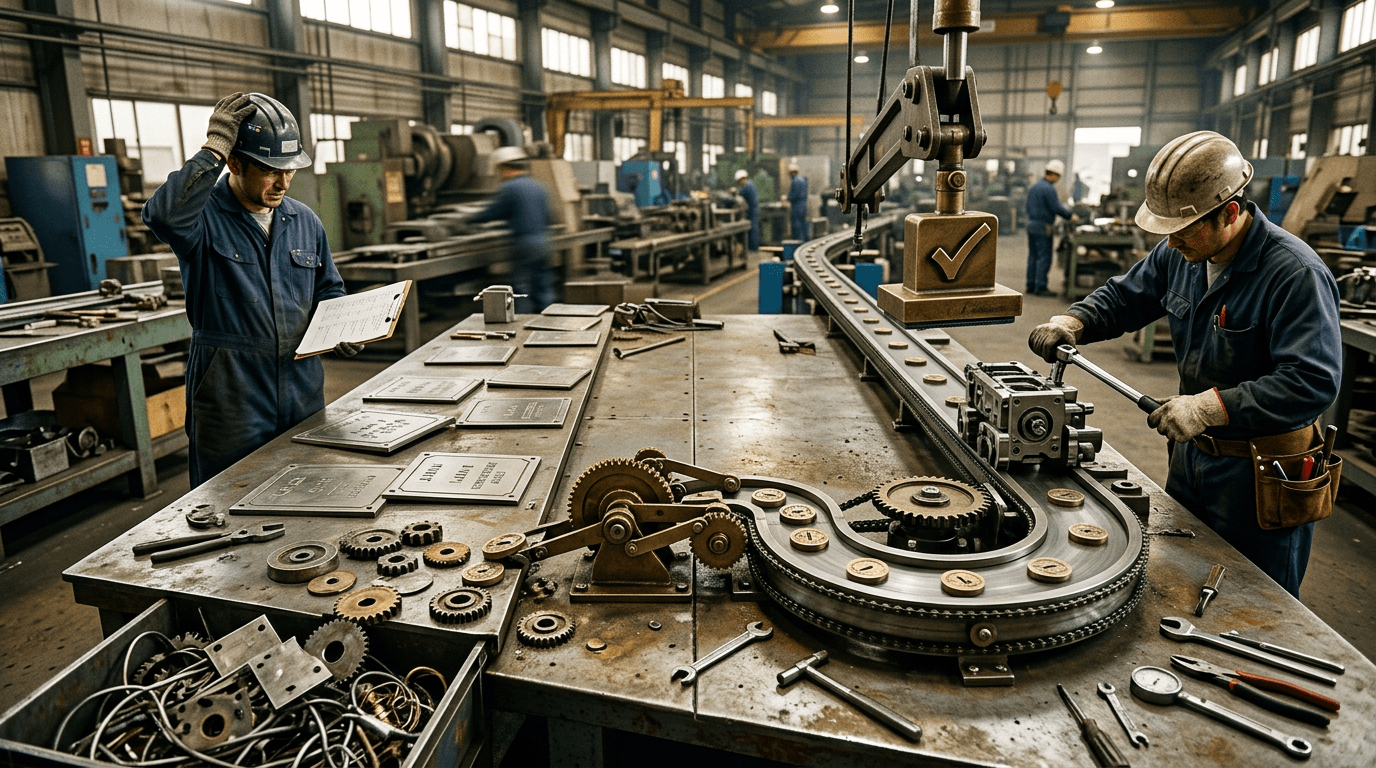
AI changes factory operations in a way supervisors will recognize only when it can influence the next operational move inside a shared execution loop. If execution stays disconnected, AI mostly changes meetings, dashboards, and slide decks. The plant experiments. It talks about intelligence. It still measures the same delays—because intelligence without a landing zone is commentary, not control.
Connected execution means AI output can reach shared operational truth, a defined owner, a workflow step such as a task or approval, and tracked follow-through until closure. If any link is missing, AI can still look impressive while remaining peripheral. Operations do not improve when insight stays trapped in interpretation. They improve when the next move becomes clearer, owned, and visible in the same system the plant runs.
Disconnected AI tends to produce summaries and chat answers that require manual interpretation. Connected AI tends to produce prioritized issues with context, suggested routing that can become owned work, explicit accountability, and status that can be audited without reconstructing private conversations. The difference is not cosmetic. It is whether the floor gains speed or gains another channel of noise.
When execution is connected, the first shifts usually show up in triage and handoffs. Events that once surfaced late in scattered threads can be grouped, deduplicated, and ranked against thresholds—shortening the distance between signal and response. Quality, production, warehouse, and maintenance stop re-explaining the same situation because context travels with the work item instead of being rebuilt in every meeting. Ad hoc prioritization in corridors begins to yield to visible queues and explicit approvals where risk requires them—often the first sign that AI is entering the operating model rather than sitting beside it. Follow-through strengthens when tasks have states, escalation rules exist, and nobody has to guess whether something was actually done.
This pattern works when leadership treats AI as operations infrastructure, not as a pilot slide. It works when the plant accepts that better routing can feel disruptive at first, because it removes informal shortcuts and makes hidden work visible. It fails when definitions still conflict across functions, when teams treat AI as a substitute for governance, or when models multiply faster than handoffs mature. In that state, AI amplifies coordination debt instead of reducing it.
IRIS matters in this narrative because connected execution needs one place where recommendations can become owned work, approvals, and tracked closure. The value is not only pattern recognition. The value is that patterns can land somewhere operationally meaningful—so assistance turns into mechanism.
For a complementary read on sequencing intelligence before model sprawl, see Why Factories Need One Decision Layer Before More AI Models. For cross-functional ranking once priorities must compete, see How AI Can Prioritize Factory Issues Across Functions.
Quick self-test: Can AI output create or update a work item without copy-paste? Is there one visible cross-functional priority queue? Are approvals defined for sensitive actions? Do managers audit closure, not only activity? Can you trace an incident from signal to action to outcome in one system story? If you answer “no” more than twice, you likely have AI adjacent to operations—not inside them.
AI changes factory operations when execution is connected because the plant finally gives recommendations somewhere to land. Until then, AI changes conversations more than results—which is why promising pilots can still feel operationally thin.
The operational bottom line
The promise of this article—a concrete picture of the operating shifts that appear only when AI is connected to one execution layer, not parked in isolated analytics tools—becomes operational only when it changes how work moves: clearer ownership, faster first assignment, and closure you can trace without inbox archaeology. For “How AI Is Changing Factory Operations When Execution Is Connected,” treat that as the acceptance test: the next shift should be able to read what happened, what was approved, and what remains open—without relying on verbal reconstruction.
DBR77 IRIS connects AI to factory operations through one execution layer so recommendations can become routed work, approvals, and visible closure across production, warehouse, quality, and maintenance. Start interactive demo or Watch walkthrough.