How AI Can Reduce Downtime When Response Loops Exist
3 min read
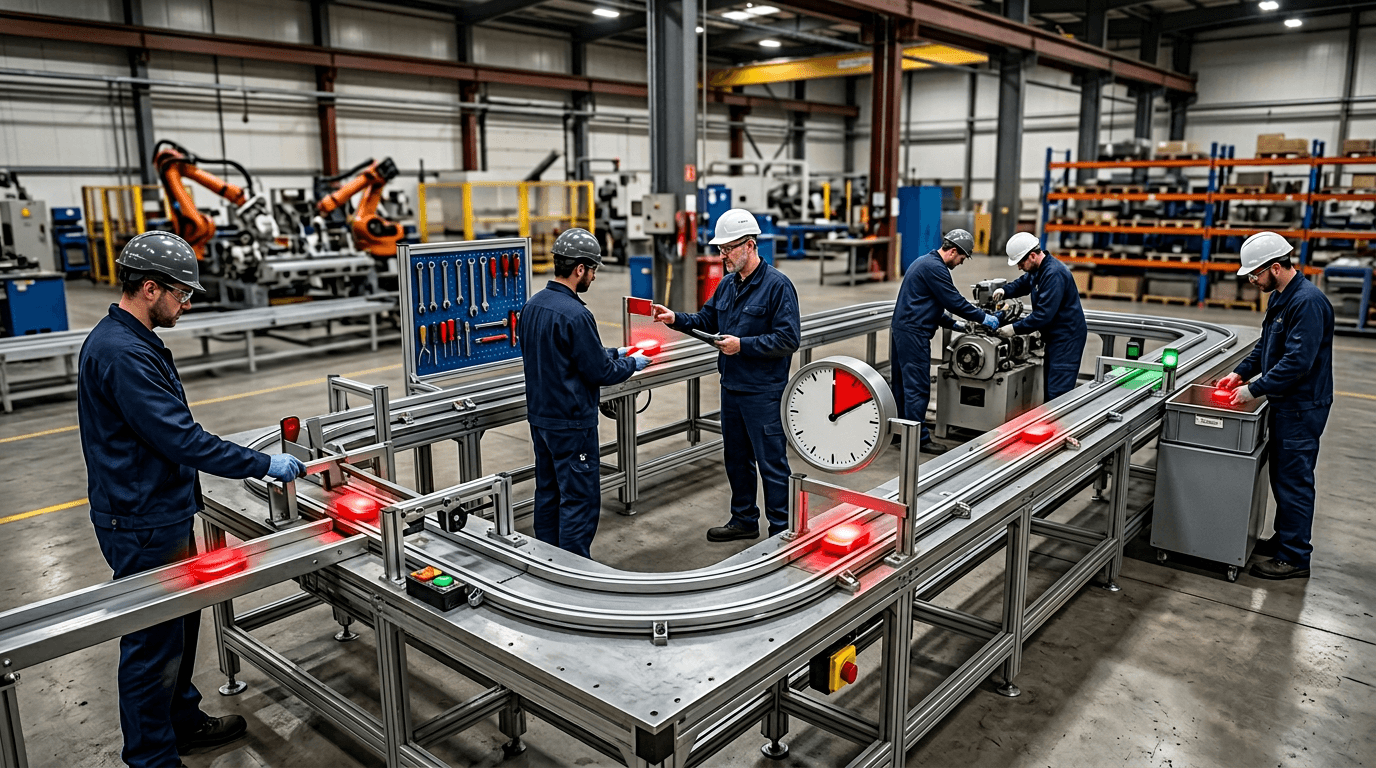
AI can reduce downtime only when a response loop already exists: detect the event, record it with context, assign an owner, task corrective steps, escalate at thresholds, and close with evidence. Inside that loop, AI can compress time through faster triage, better cross-functional prioritization, draft work packages, and surfacing similar past closures. Without the loop, AI narrates downtime after the fact—politely, maybe even insightfully, but not usefully in minutes.
Define the loop in factory language. A credible chain includes a trigger, a timestamped record with asset and line context, a named responsible role for the next action (not a mailing list), tasking with expected completion and dependencies, escalation when time or risk crosses a boundary, and closure that ties root cause categories to actions and restart confirmation where required. If any step is soft, AI cannot compress time reliably. It compresses confusion into prettier sentences.
Where AI often helps—when data and ownership are real—is clustering noisy alarms into a ranked short list, proposing routing based on skill, shift, and history, pre-filling work order text and safety notes for human edit, surfacing prior closures that match symptom patterns, and highlighting when a stop waits on quality release rather than mechanical work. Each item still needs human confirmation at the right thresholds.
Readiness is measurable. Stops should create tasks quickly. Reason codes should be enforced at the line. Handoff fields should be understood across maintenance, quality, and production. Escalation paths should exist for repeat offenders and safety-critical assets. Mean time to assign an owner should be measured—not guessed. If you cannot measure assign time, do not expect AI to fix it.
Dashboard-driven downtime cultures review in meetings. Loop-driven cultures assign owners and tasks. AI aligns to loops because loops give assistance something to accelerate. Without loops, AI aligns to commentary.
Keep AI advisory when interlocks or regulated release steps dominate, when work order discipline is still immature, or when technicians report that suggestions disrupt troubleshooting judgment. Advisory mode can still save drafting time and surface history.
IRIS aligns downtime assistance with execution when detection, ownership, escalation, and closure sit in one task and approval fabric—so assistance maps to named owners and real closures instead of floating in side channels.
For connected execution more broadly, see How AI Is Changing Factory Operations When Execution Is Connected.
Think about the minutes that disappear after the stop is visible. They are often spent deciding whether the stop is “real,” who should be paged, whether quality must be involved, whether maintenance owns it or production does, and whether the line can restart safely. AI can shorten those minutes only if the plant has already decided what evidence is required, what priority means, and what “assigned” looks like in the system. Otherwise assistance becomes another fast channel of opinions.
The cultural shift is equally important: downtime improvement is not a maintenance-only KPI when causes cross functions. A loop-driven plant treats a stop as a plant event with a plant response—while still preserving clear role ownership. That is the environment where assistance helps most, because it can surface cross-links without dissolving accountability.
AI reduces downtime when the plant measures response, not only stoppage. Build the loop first. Then let assistance compress the weak segments.
The operational bottom line
The promise of this article—a concrete picture of the response loop AI can accelerate, plus where AI adds nothing without tasking and thresholds—becomes operational only when it changes how work moves: clearer ownership, faster first assignment, and closure you can trace without inbox archaeology. For “How AI Can Reduce Downtime When Response Loops Exist,” treat that as the acceptance test: the next shift should be able to read what happened, what was approved, and what remains open—without relying on verbal reconstruction.
DBR77 IRIS keeps downtime events, maintenance tasks, quality holds, and production signals in one execution layer so AI maps to owners and closures. Start interactive demo or Start 14-day trial.