How AI Can Prioritize Factory Issues Across Functions
3 min read
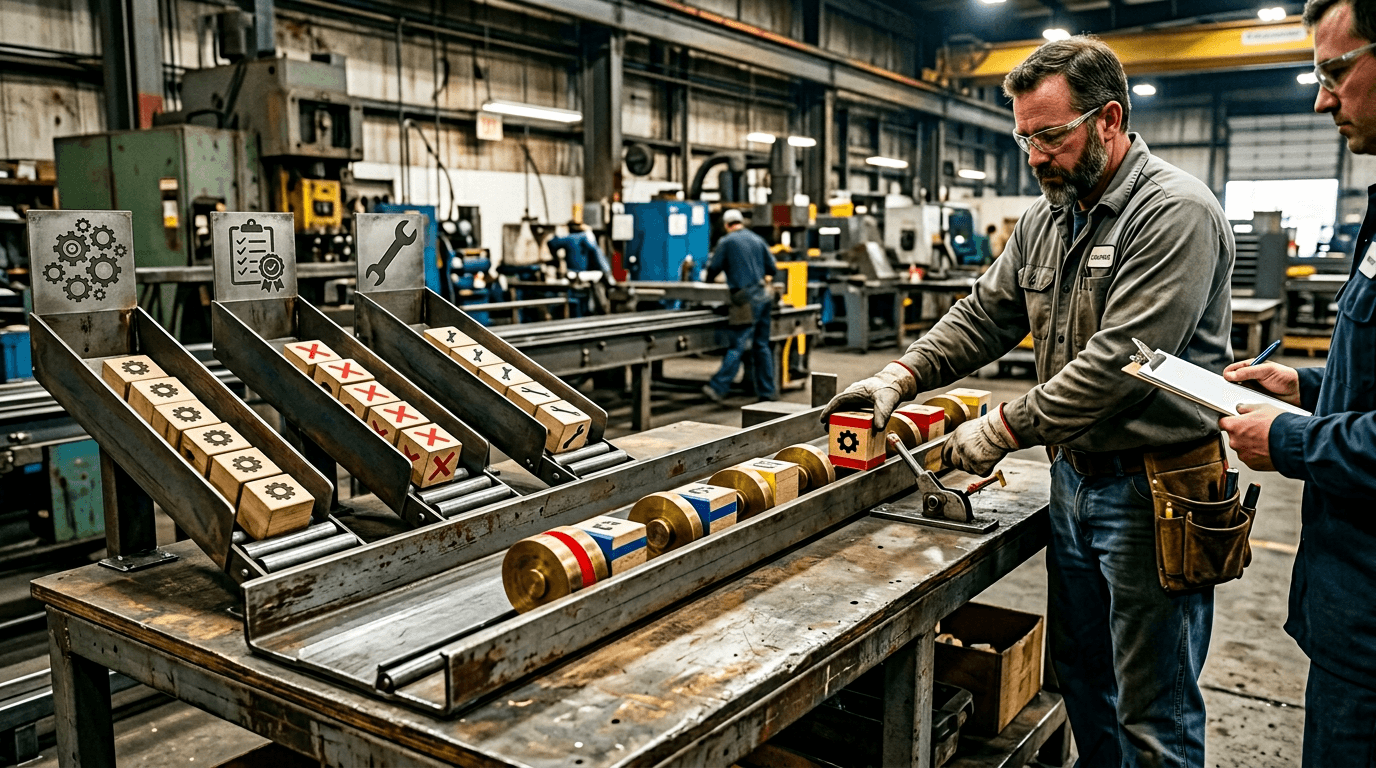
Cross-functional prioritization is often a political process disguised as a technical one. Production, quality, maintenance, and logistics each speak plausible urgency. Without a shared grammar, the plant loses minutes and hours debating which fire is hottest—while the line pays the price. AI helps only when the politics become visible and rule-bound: shared intake, explicit scoring dimensions, and routed follow-through that lands as owned work.
Start by normalizing intake so issues become comparable. Different functions describe pain differently; assistance begins with structure—common required fields, a shared severity scale, explicit links to asset, order, customer, or batch where possible. Free-text-only intake produces impressive summaries and weak prioritization, because the plant cannot rank what it has not made comparable.
Build a rubric everyone can argue with—small enough to remember, explicit enough to defend. Typical dimensions include safety and compliance exposure, customer and schedule impact, operational drag, and recurrence (is this the same failure mode as last week?). Keep weights simple at first. Complexity is not sophistication; it is often a way to hide unowned judgment behind math.
Let AI propose scores while humans calibrate early. A practical pattern is: proposals plus rationale snippets, supervisor adjustments with reason codes for a few weeks, then freeze weights unless KPIs shift materially. This trains the model and trains the organization to disagree in a structured way.
Prioritization without routing is a meeting substitute. Each prioritized item should land with an owner role, carry handoff context, include a due clock, and escalate if stalled. Ranking a report is not execution. Moving work is.
Use thresholds to separate automatic moves from human gates. Publish them. Secret thresholds create distrust. A common shape is: below a combined score, standard queue assignment; above it, shift lead confirmation; above a higher tier, cross-functional triage. The exact numbers matter less than the fact that everyone knows the rules.
Anti-patterns kill cross-functional prioritization: “AI priorities” living in a tool nobody operates from; rankings that ignore maintenance capacity reality; prioritization without closure metrics that expose whether the system actually finishes what it starts.
IRIS matters because cross-functional prioritization fails when scoring logic and execution routing live in different places. The plant needs shared intake, a visible rubric, and one path from priority to owned work.
If the missing piece is the decision layer itself, start with Why Factories Need One Decision Layer Before More AI Models.
Prioritization is emotionally loaded because it decides who gets helped first. A visible rubric does not remove politics, but it makes tradeoffs discussable. When scores are published and adjustable with reason codes, the plant can argue about weights and facts instead of arguing about who “always gets ignored.” That shift is often the difference between a tool people trust and a tool people route around.
Also remember capacity. Ranking ten urgent issues does not help if maintenance can only run three jobs and quality can only release so many holds per hour. Good cross-functional prioritization includes feasibility signals—otherwise the plant creates a beautiful priority list and still executes randomly under constraint.
AI prioritization works when the plant commits to shared intake, a visible rubric, and routed follow-through. Otherwise AI becomes another opinion in the room—and opinions are what the plant already has too many of.
The operational bottom line
The promise of this article—a practical method to combine signals, apply a transparent rubric, and route prioritized work with human confirmation at defined thresholds—becomes operational only when it changes how work moves: clearer ownership, faster first assignment, and closure you can trace without inbox archaeology. For “How AI Can Prioritize Factory Issues Across Functions,” treat that as the acceptance test: the next shift should be able to read what happened, what was approved, and what remains open—without relying on verbal reconstruction.
DBR77 IRIS supports cross-functional prioritization that connects scoring to routed tasks, escalations, and tracked closure in one execution layer. Start interactive demo or Start 14-day trial.