How AI and Digital Twin Work Together in Factory Decisions
3 min read
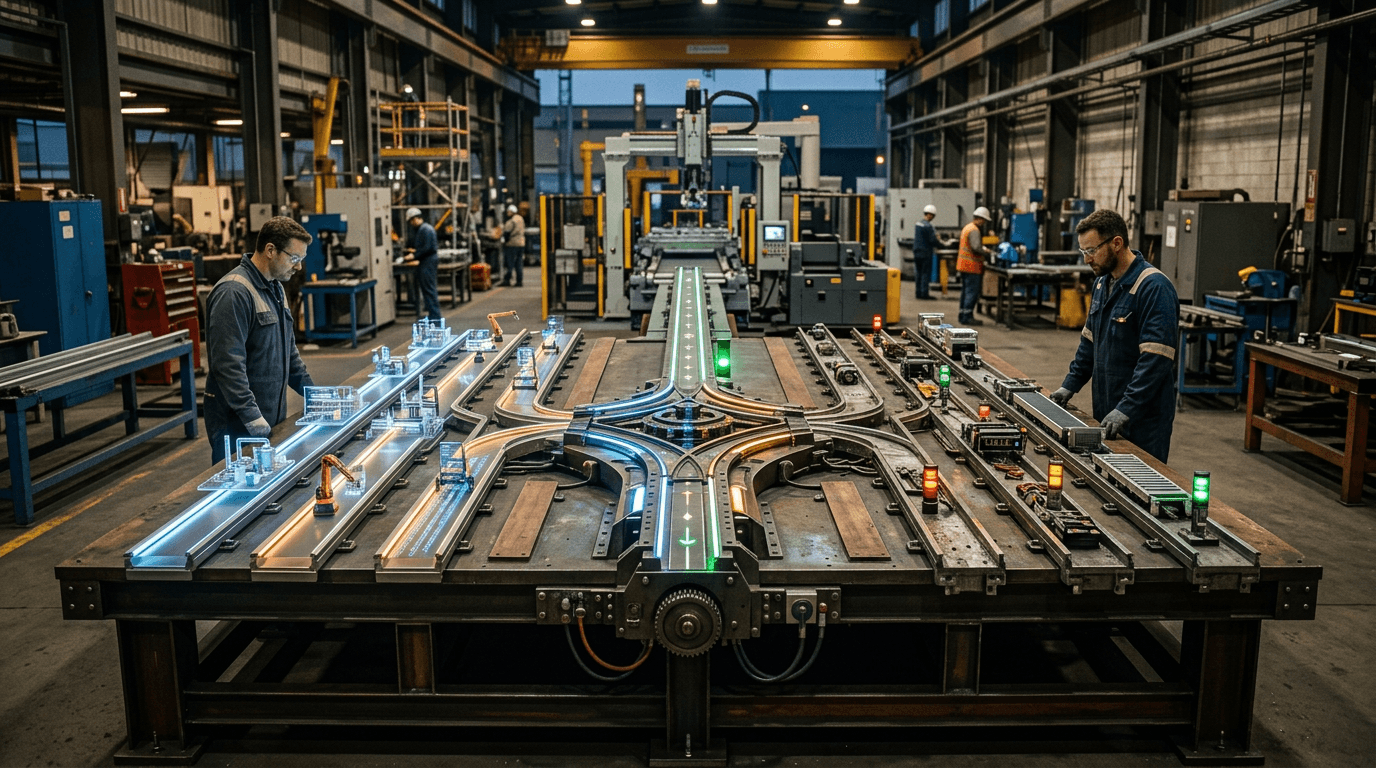
AI and digital twin are easy to bundle into the same innovation slide—and easy to run as separate hobbies. The operational pairing is tighter: the twin answers what could happen under scenario discipline; AI plus an execution layer answers what should happen next, who owns it, and whether closure happened—using live data, thresholds, and approvals. The bridge is a published handoff. Twin outputs become constraints and targets. The plant operating system turns them into tasks and measures reality against them.
Split the jobs without splitting accountability. The twin explores capacity bands, queue risk, changeover impact, and sensitivity—leaving assumptions visible. Operational AI highlights drift now and proposes next moves inside rules—leaving signals and uncertainty flags traceable. The execution system assigns work, enforces approvals, and records closure—so the plant can audit cycle time and outcomes. If twin work never becomes tasks, simulation stays academic. If AI never sees twin constraints, optimization drifts toward the wrong reality.
A practical handoff has five beats: define the decision; run twin scenarios with explicit inputs and documented limits; pick a direction and translate it into operating targets; publish targets as thresholds inside workflows rather than as email attachments; run execution loops that detect breach, task owners, require approvals where needed, and close with evidence. Most plants fail at the publish step—they align in a meeting on Friday and operate without binding thresholds on Monday.
Many teams do the hard analytical work correctly, then let the result die as a slide, a PDF, an emailed action list, or a summary nobody converts into live rules. That is why the plant can sound aligned and still revert to improvisation: the decision existed; the operating system never received it.
The pairing works when definitions for orders, routes, and downtime reasons are stable enough to compare plan to reality, when maintenance and quality events are tasked rather than only logged, and when supervisors can see both plan envelope and live drift in one place. It fails when the twin is fed by stale spreadsheets, when AI runs on cleaned exports that miss night-shift reality, or when nobody owns updates after a layout change.
Twin-only thinking mistakes simulation for safety. AI-only thinking mistakes pattern fit for plant truth. Paired thinking chooses a scenario, publishes its limits, and tasks responses when limits break. That is operational thinking.
IRIS completes the loop when targets, thresholds, approvals, and follow-through live in the same execution record as daily work—turning scenario results into governed action instead of files waiting for the next meeting.
Pair digital twin with AI through explicit targets, thresholds, and tasking. Simulation without execution is optimism. Execution without scenario discipline is noise.
The operational bottom line
The promise of this article—a plain split of roles, handoffs, and ownership so twin outputs become actionable tasks, thresholds, and follow-through instead of slide decks—becomes operational only when it changes how work moves: clearer ownership, faster first assignment, and closure you can trace without inbox archaeology. For “How AI and Digital Twin Work Together in Factory Decisions,” treat that as the acceptance test: the next shift should be able to read what happened, what was approved, and what remains open—without relying on verbal reconstruction.
That standard is not about software perfection; it is about operational honesty: fewer mystery handoffs, fewer truths reconciled only in meetings, and more days where the system record matches what the floor would say if you stopped them mid-task.
Hold teams to a simple rule: if an improvement cannot be shown in exports from the execution record, it is not yet an operating improvement—only a narrative improvement. That rule keeps programs honest when demos look good but handovers still feel fragile.
DBR77 IRIS keeps twin-derived targets next to live tasks, approvals, and closure records so simulation results translate into execution loops. Start interactive demo or Start 14-day trial.