Autonomous Factory: Myth or Operating Reality
3 min read
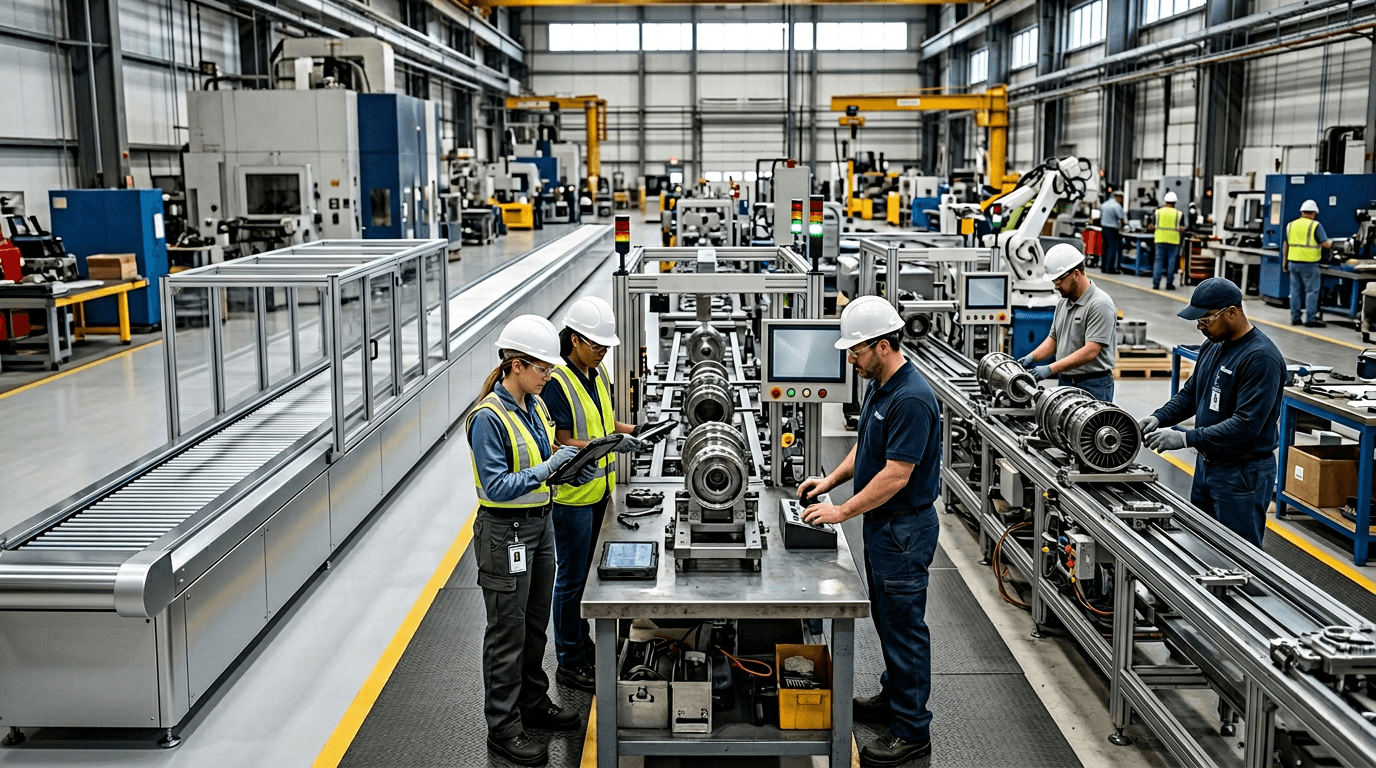
A fully autonomous factory in the science-fiction sense remains mostly myth for mainstream operations. Realistic autonomy shows up as bounded automation inside workflows: faster detection, disciplined execution loops, and machine-driven actions only where thresholds, roles, and audits are already explicit. Autonomy is not one switch. If you treat it as one thing, you argue about religion instead of operations.
The myth version whispers that the plant runs itself, humans become optional, AI replaces judgment across functions, and optimization hums continuously without friction. That story collides quickly with safety systems, quality regimes, customer changeovers, maintenance judgment, supplier variability, and workforce reality. Hype sells; plants still have to run Monday morning.
Operating reality is quieter and more useful. Autonomy within a workflow means the system can advance a work item, notify owners, and enforce timers while still stopping at approvals. Autonomy within a threshold means controllers or rules act only when conditions are explicit and monitored. Autonomy within a closed loop means measurement, action, verification, and logging travel together—not a single model output treated as destiny. This is autonomy as machinery with guardrails, not autonomy as magic.
For a COO, “more autonomous” should mean fewer lost handoffs, shorter time-to-first-action, higher closure rates on recurring issues, and less coordination tax on supervisors. Those outcomes can be true without claiming a lights-out plant. They are also easier to defend to boards than a slide that promises self-governing factories.
Autonomy talk becomes dangerous when it bypasses governance, hides ownership behind “the algorithm,” weakens traceability, or discourages investment in execution infrastructure. Factories rarely fail from lack of ambition. They fail from lack of closure discipline.
IRIS supports realistic autonomy language because bounded autonomy only works when the plant can state which moves are automated, which are recommended, which require approval, and which remain fully human. A governed execution layer makes those boundaries explicit instead of burying them inside vendor vocabulary.
The practical test for leadership is whether autonomy language makes the week calmer or louder. Bounded loops show up as fewer mysteries at handover: the system state matches the physical state, exceptions have owners, timers exist, and nobody has to reconstruct decisions from hallway memory. Myth-grade autonomy shows up as confident software narratives that crumble the first time an auditor asks for a single thread from signal to approval to task completion. Boards do not need a fairy tale about self-running plants. They need a credible story about fewer unowned minutes and more repeatable response.
This is also why autonomy discussions should be anchored in workflows, not in headlines. A line can become more autonomous in the only sense that matters—repeatable, measured, governed—when routine coordination moves into explicit rules, when assistance is mode-bound, and when humans remain accountable for the exceptions that actually decide safety and customer outcomes. That is not a retreat from ambition. It is ambition translated into something a plant can operate, audit, and improve.
Treat “autonomous factory” as a bundle of bounded loops, not a headline. You can pursue real autonomy gains without pretending the plant is self-governing—because in real operations, maturity is measured in closure, not in theater.
The operational bottom line
The promise of this article—a precise split between myth-grade autonomy claims and realistic autonomy patterns that still require governance, approvals, and human ownership—becomes operational only when it changes how work moves: clearer ownership, faster first assignment, and closure you can trace without inbox archaeology. For “Autonomous Factory: Myth or Operating Reality,” treat that as the acceptance test: the next shift should be able to read what happened, what was approved, and what remains open—without relying on verbal reconstruction.
That standard is not about software perfection; it is about operational honesty: fewer mystery handoffs, fewer truths reconciled only in meetings, and more days where the system record matches what the floor would say if you stopped them mid-task.
DBR77 IRIS makes bounded autonomy operational by unifying tasks, approvals, and audit-friendly execution across production, warehouse, quality, and maintenance. Start interactive demo or Watch walkthrough.